

Gluten Free Naan Recipe: Soft, Chewy, Skillet-Bubbled
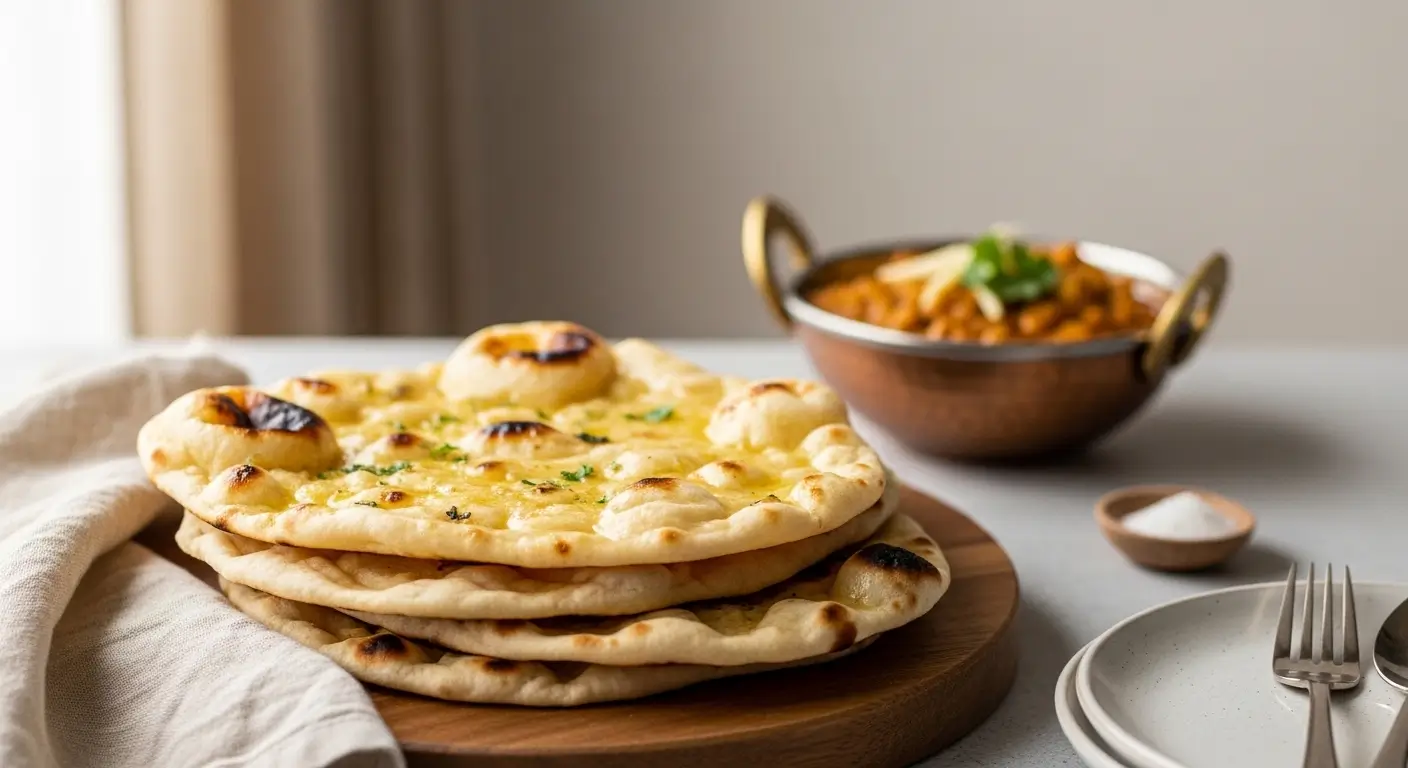
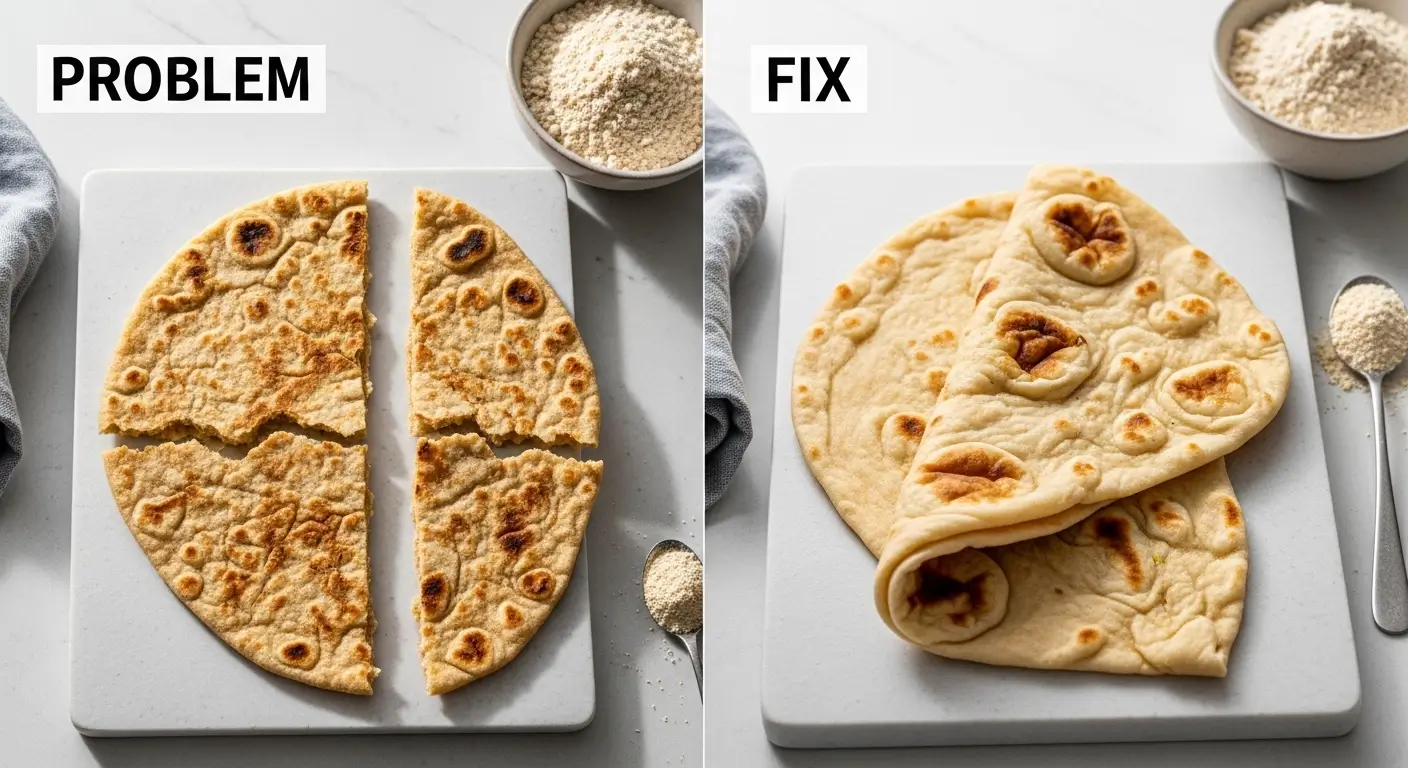
Gluten free naan needs to accomplish three tasks: to bend and not crack, to blister on a hot pan, and to remain soft once it is cooled. That’s the whole mission. When you have made and failed to arrive at anything dry, gummy, or weak, it is not your fault, but that of the dough set-up.
Conventional naan is gluten based and uses it to trap the steam and make it chew. Gluten-free naan should have another formula: the proper balance of flour, the proper binder, and the right amount of hydration.
It provides you with two trustworthy options (fast no-yeast naan and restaurant-style yeasted naan), as well as an aid in decision-making when it comes to blending flours, xanthan gum vs. psyllium husk gel, dairy-free/vegan substitutes, and a roadmap of troubleshooting every possible failure.
What Is Naan (and Is Naan Gluten Free?)
Naan is a traditional South Asian flat bread that is traditionally baked at a high temperature in a tandoor. It is normally seasoned with yogurt (curd), occasionally brushed with ghee or garlic butter as well as served along with curries, kebabs or as a wrap.
Is naan gluten free?
The conventional naan is made of wheat flour, hence not gluten free. This is achieved by a gluten free naan recipe that involves the use of gluten free flours and a binding agent to replicate the soft, chewy, pliable texture.
When you are preparing something to feed a celiac disease or high gluten allergy, ingredient labels and cross-contact control are of more importance than the recipe.
The gluten-free foods in the U.S. should comply with a specified gluten level (less than 20 parts per million) of the food and labeling regulations. Gluten-free is also associated with a limit in the EU (not more than 20 mg/kg).
Also Read: Sourdough Bread Machine Recipe: Easy Loaf with Starter 2026
Who This Gluten Free Naan Is For
This method is built for:
- Homemade cooks who desire to have simple gluten free naan on a skillet (no tandoor required)
- Individuals on gluten-free diet, such as those who have to cope with celiac disease
- Anyone that requires dairy free, vegan, or egg free options
- Individuals that prepare their meals in advance and require naan that can be frozen and reheated
Why Gluten Free Naan Often Fails (So You Can Avoid It)
The majority of issues are caused by one of them:
- Improper balance of flour: excess grain flour = dry and crumbly; excess starch = gummy
- Lacking structure: no binder, or binder applied in a wrong manner
- Hydration imbalance: the dough of gluten-free must have sufficient water to gel and steam
- Pan not hot enough: no bubbles, no blisters, tough bread
When you learn how to control those four then gluten free naan is repeatable.
The Naan Structure System: Flour + Binder + Hydration
Consider gluten free naan more of a system rather than an ingredient gimmick.
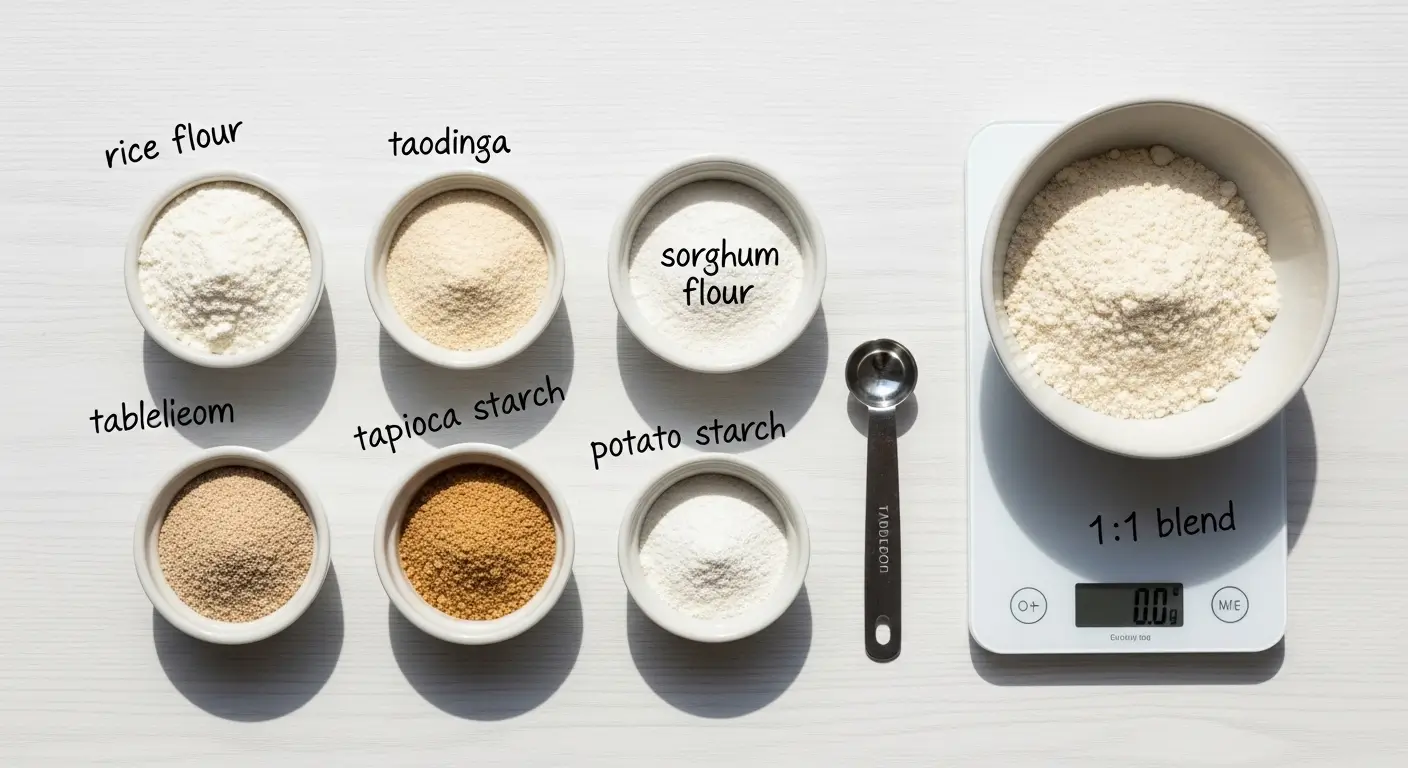
1) Flour blend (the universal framework)
Great naan usually uses:
Body flours (flavor + structure): rice flour, sorghum, millet, buckwheat
Starches (softness + blistering): tapioca starch, potato starch, cornstarch
A practical global ratio is:
45–60% starch + 40–55% body flour
Flour Blend Matrix (choose your path)
| What you have | Best use for naan | Expected texture | Notes |
|---|---|---|---|
| “1:1” / Measure-for-Measure blend (e.g., King Arthur Measure for Measure) | Fast naan, everyday use | Soft, reliable | Results vary by brand; hydration may need adjusting |
| GF Bread Flour blend (some include binders) | Yeasted naan | Chewier, more bread-like | Often needs less extra binder; follow feel cues |
| DIY blend: rice flour + tapioca + potato/corn | Most consistent worldwide | Customizable | Best for global readers; easy to troubleshoot |
| High whole-grain GF flour only (sorghum/buckwheat) | Not ideal alone | Can be dense/dry | Cut with starch for softness |
2) Binder choice (psyllium vs xanthan vs “egg help”)
Gluten-free naan needs a binder to mimic stretch and hold steam.
Alos Read: Cherries in the Snow Recipe: Easy No-Bake Dessert 2026
Binder Choice Table
| Binder | What it does | Best for | Common mistakes |
|---|---|---|---|
| Psyllium husk (whole husk) | Forms a gel that creates elasticity | Soft, pliable naan that folds | Not resting dough long enough for gel to form |
| Xanthan gum | Adds structure and binding | Convenience, widely available | Using too much can make naan “bouncy” or gummy |
| Egg / flax egg (optional) | Adds cohesion and richness | Extra tender naan | Can shift flavor; not needed if binder + hydration are right |
Global note: In South Asia, psyllium is often sold as isabgol—the same idea, but check labeling and grind size.
3) Hydration (the hidden lever)
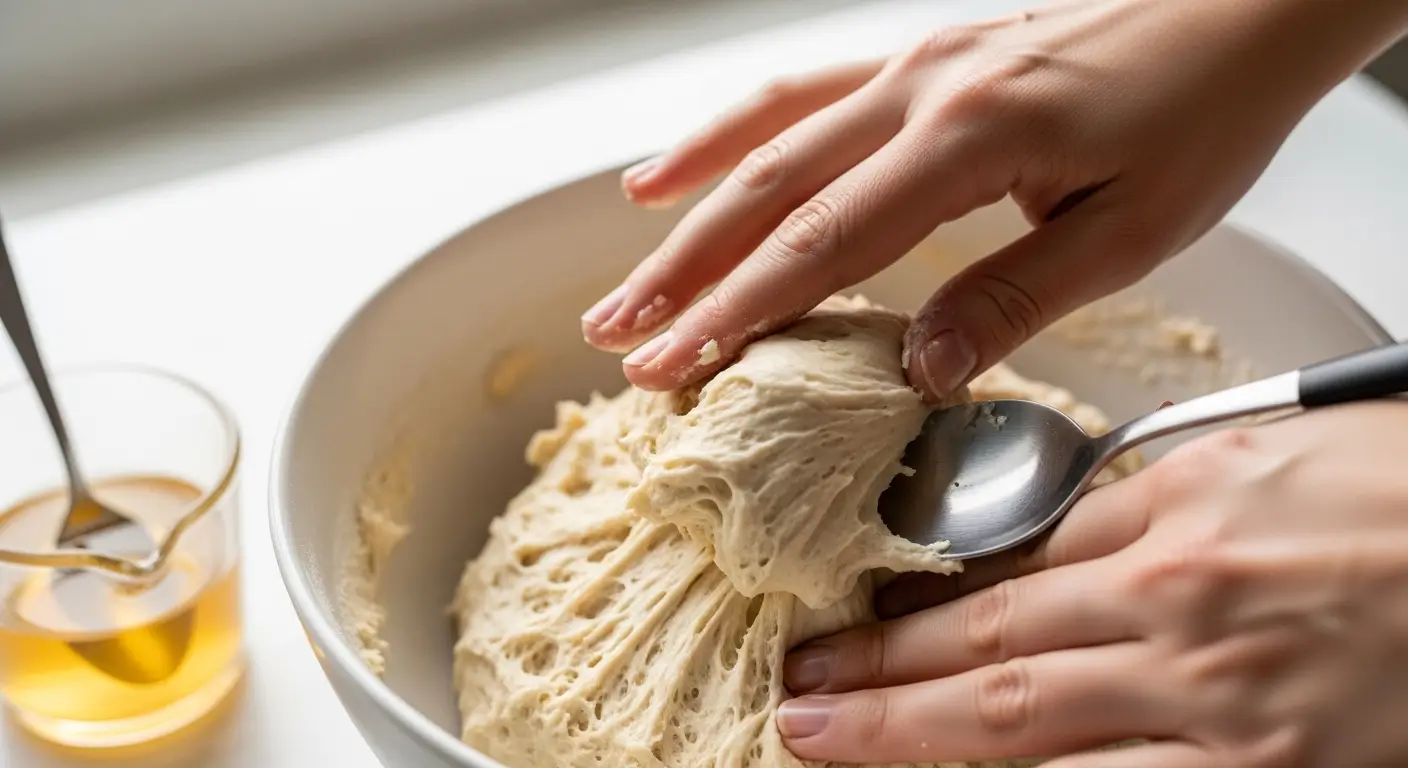
Gluten-free naan dough should feel tacky and soft, not dry like pie dough. Hydration activates the binder and creates steam bubbles on the skillet.
Hydration rule you can trust:
If the dough cracks when pressed or rolled, it’s too dry. If it spreads like batter, it’s too wet. You want a dough that holds shape but still feels sticky.
Tools You Need (and What Actually Matters)
- Cast iron skillet (best blisters) or heavy stainless pan
- Parchment paper (rolling without tearing)
- Digital scale (highly recommended for consistent results)
- Tongs/spatula
- Optional: lid to trap steam for thicker naan
Cast iron vs nonstick for bubbles
Cast iron holds heat better, giving more blistering and char spots.
Nonstick works, but often needs a slightly higher preheat time to get the same puff.
Also Read: Sausage Potato Leek Dijon Mustard Hash Recipe 2026
Gluten Free Naan Recipe (Fast, No-Yeast)
This is the “weeknight” version: no proofing, no waiting, still soft and chewy.
Ingredients (makes 6 naan)
Dry
- 140 g fine rice flour
- 90 g tapioca starch
- 30 g potato starch (or cornstarch)
- 10 g whole psyllium husk (or 1½ tsp xanthan gum)
- 2 tsp baking powder
- ¾ tsp salt
- 1 tsp sugar (optional, helps browning)
Wet
- 180 g plain yogurt (or dairy-free yogurt)
- 2 tbsp oil (olive or neutral)
- 140–170 g warm water (start at 140 g)
Finish
- Melted butter or ghee (or olive oil)
- Minced garlic + chopped cilantro (optional)
Step-by-step method (skillet)
- Mix dry ingredients in a large bowl.
- Add yogurt and oil, then pour in 140 g warm water.
- Stir until a sticky dough forms.
- Rest 10 minutes so the psyllium gel sets (or xanthan fully hydrates).
- Adjust hydration:
If cracking → add 1 tbsp water, rest 2 minutes, recheck
If too wet to shape → add 1 tbsp rice flour - Divide into 6 pieces. Lightly oil hands.
- Roll each between parchment sheets to about ¼ inch (6 mm).
- Heat skillet medium-high until very hot. Lightly oil and wipe excess.
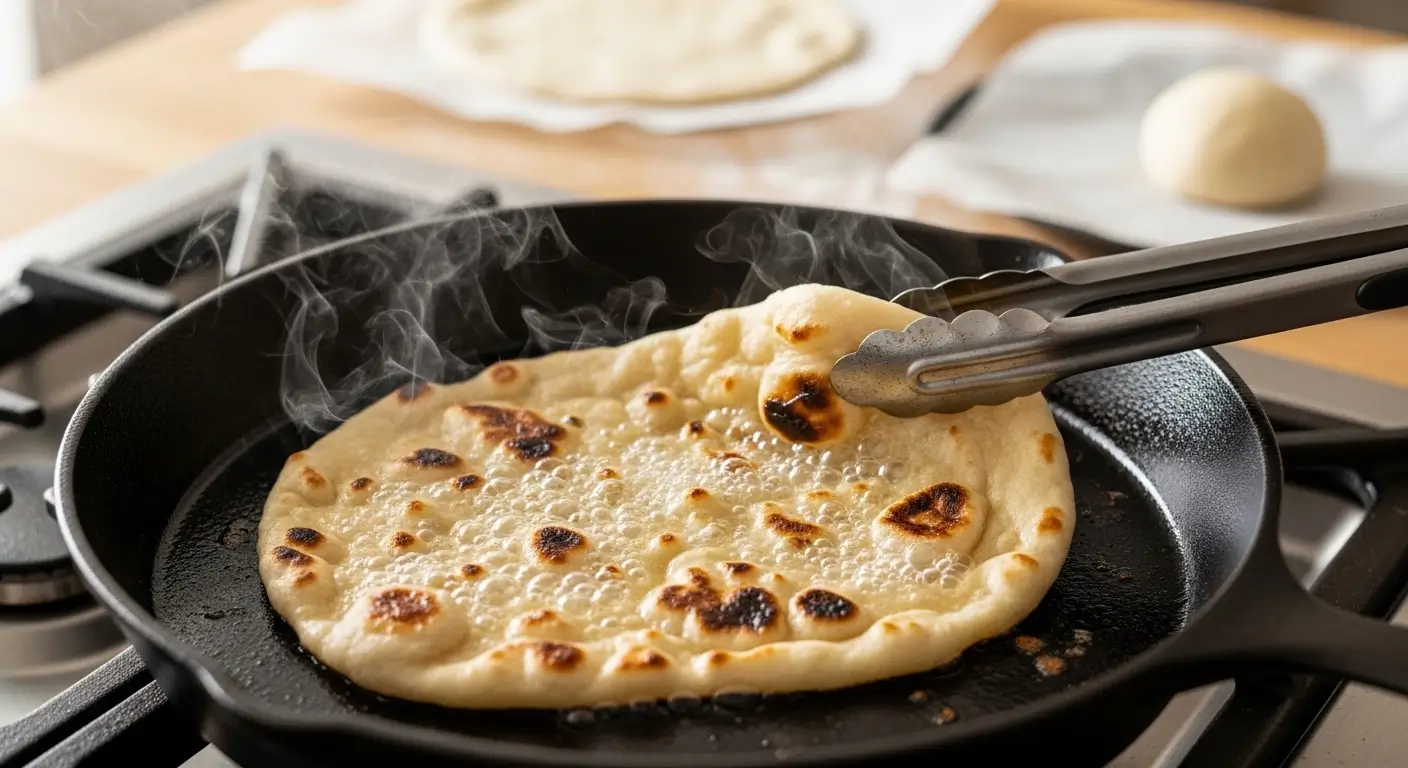
- Cook each naan 60–90 seconds until bubbles and char spots appear. Flip and cook 45–75 seconds.
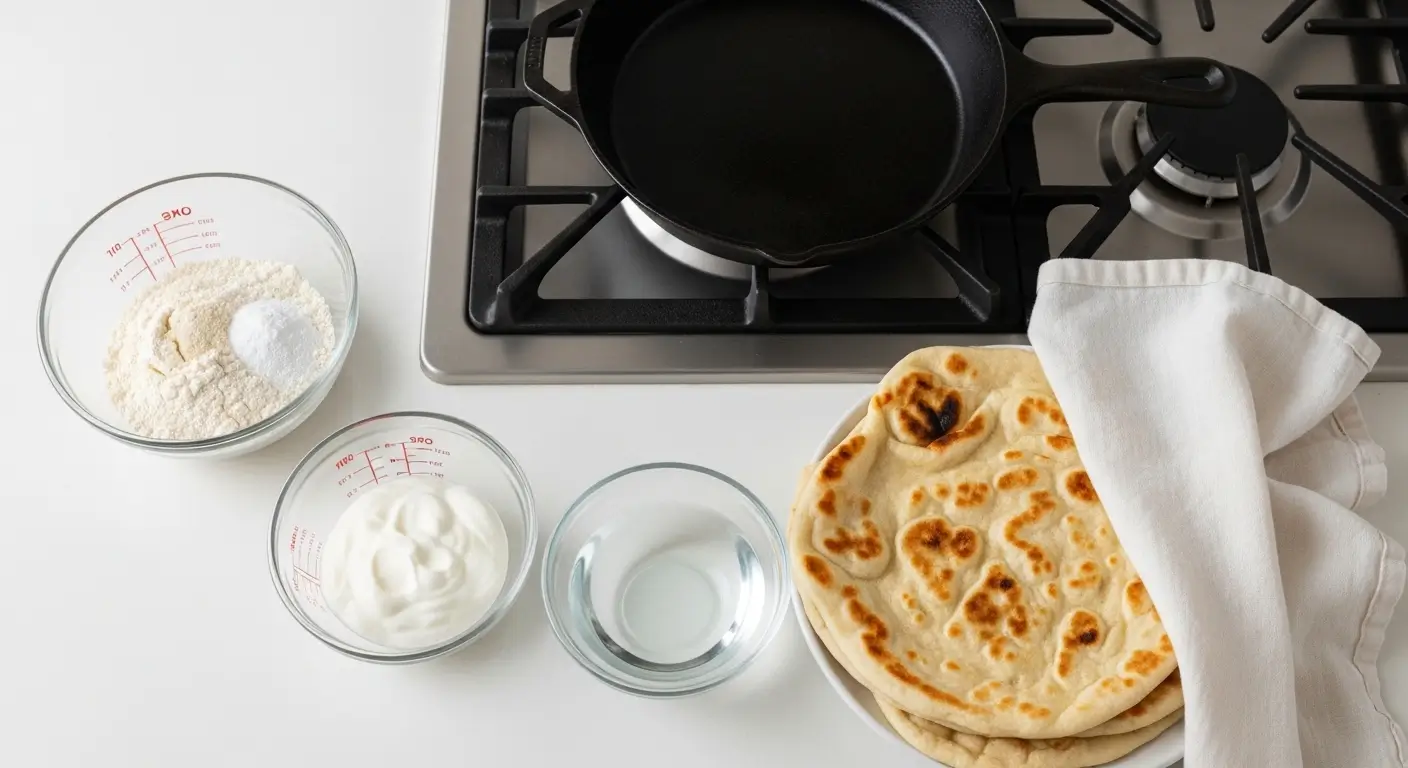
- Brush with butter/ghee/olive oil immediately and stack under a clean towel.
Garlic naan finish
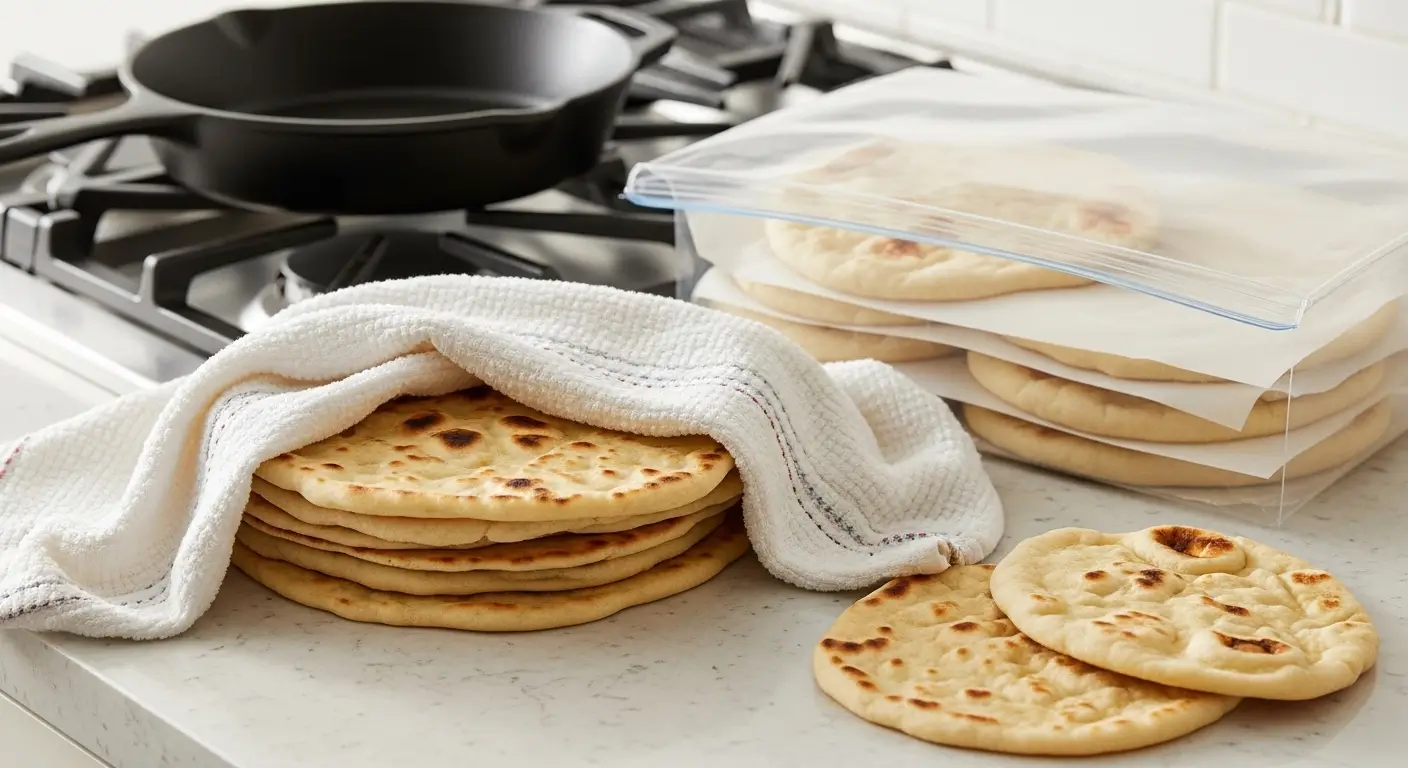
For restaurant-style garlic naan, brush with melted butter mixed with garlic (or garlic powder) and a pinch of salt. Add cilantro if you like.
Restaurant-Style Yeasted Gluten Free Naan (More Chewy, More Lift)
If you want that deeper aroma and a more bread-like chew, yeast helps.
What changes with yeast?
- More time, more flavor, slightly more puff
- Dough may need a bit more structure support, depending on your flour blend
Yeasted add-on (use the same ingredient base)
Add:
- 1 tsp instant yeast
- 1 extra tsp sugar
Then:
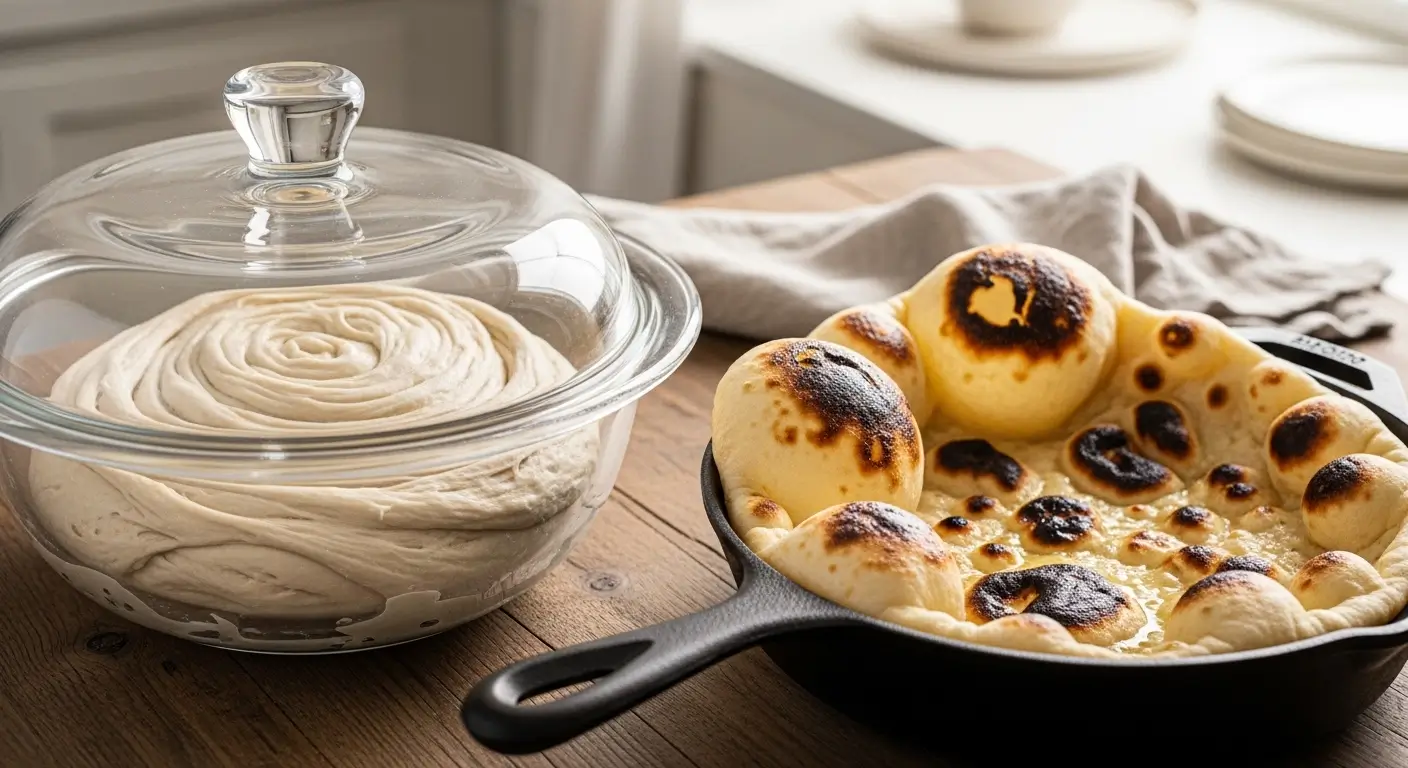
Rest covered 45–60 minutes in a warm spot
Proceed with rolling and skillet cooking as above
Also Read: Amish Apple Cake Recipe: Easy Apple Cake Dessert 2026
Yeast tip that saves batches
Warm water should feel comfortably warm, not hot. Water that’s too hot can weaken yeast performance, leading to dense naan.
Dairy-Free, Vegan, and Egg-Free Options
You can make gluten free naan vegan without sacrificing chew, as long as structure stays strong.
Dairy-free yogurt options (common globally)
Kite Hill, Forager Project, So Delicious Dairy Free (unsweetened plain styles work best)
Any unsweetened coconut/soy/almond yogurt with a thick texture
Vegan finish options
- Olive oil + garlic + salt
- Vegan butter + garlic + cilantro
Egg-free
This base method is already egg-free. If you’ve relied on eggs for structure in the past, consider psyllium gel as the main support instead.
Celiac-Safe and Cross-Contact Checklist (Quick, Practical)
- Clean skillet, tools, and countertop thoroughly
- Avoid shared butter tubs, spreads, and flour-dusted surfaces
- Use separate utensils for gluten-free foods
- Be careful with airborne flour if wheat baking happens nearby
Cross-contact can happen through shared surfaces and utensils, including airborne flour in some settings. For label reading, remember “wheat-free” is not the same as “gluten-free.”
Troubleshooting: Fix Your Naan in Real Time
Dough is cracking when rolling
Cause: too dry or under-hydrated binder
Fix: add water 1 tbsp at a time, rest 2–3 minutes, roll again
Naan tears when flipping
Cause: too thin or not enough binder/gel time
Fix: roll slightly thicker; rest dough longer; ensure correct psyllium/xanthan amount
Naan is gummy inside
Cause: too much binder, too thick, or skillet not hot enough
Fix: cook hotter and faster; roll thinner; reduce binder slightly next batch
No bubbles / no blistering
Cause: pan not hot enough or dough too dry
Fix: preheat longer; raise heat; increase hydration slightly; try a lid for 20–30 seconds
Naan turns dry after cooling
Cause: overcooked or not protected from steam loss
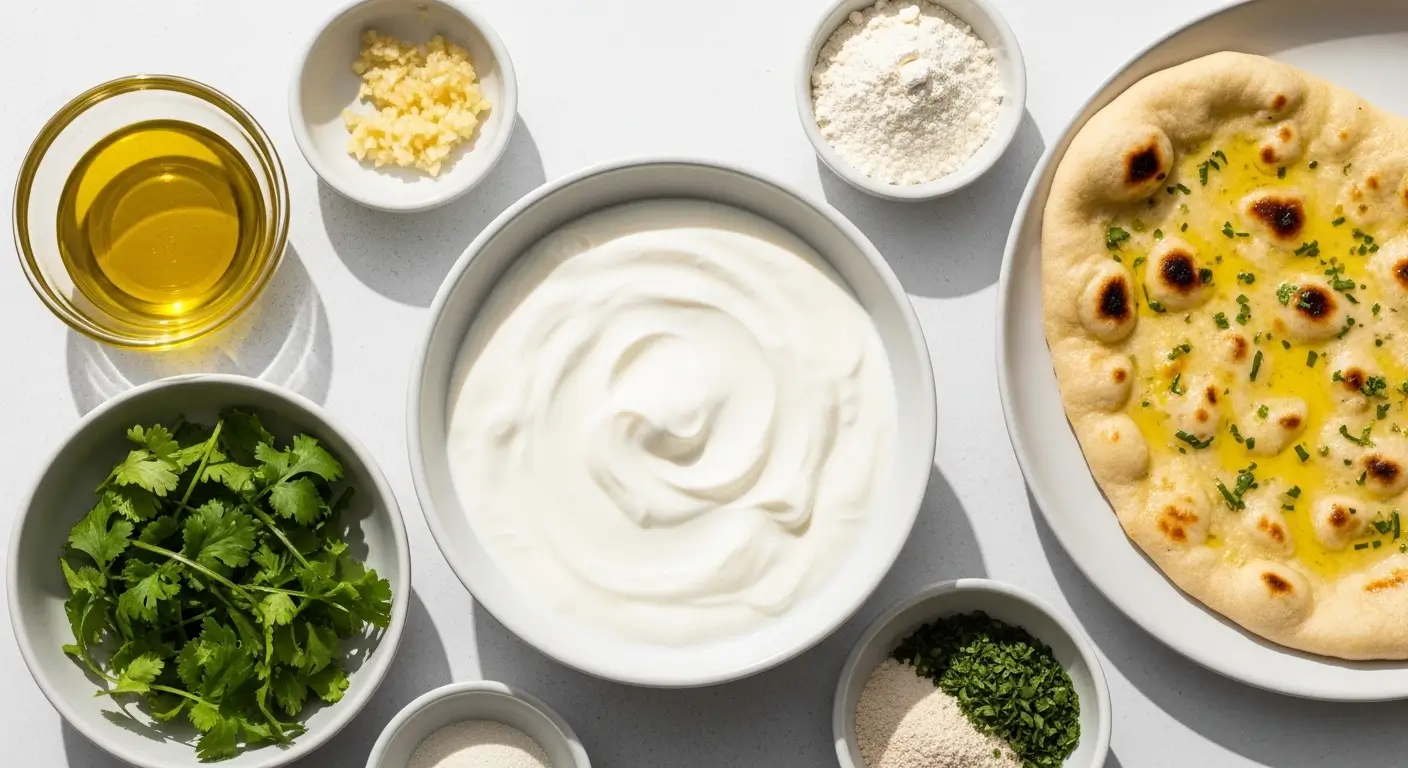
Fix: cook slightly less; brush with fat immediately; stack under a towel
Also Read: 2 Banana Muffin Recipe: Small Batch Banana Muffins
Storage, Freezing, and Reheating (So It Stays Soft)
Storage
- Room temp (airtight): up to 24 hours
- Fridge: 2–3 days (it will firm up)
Freezing
- Cool fully
- Place parchment between pieces
- Freeze in a sealed bag/container
Reheating (best methods)
- Hot skillet: 20–40 seconds per side
- Microwave under a damp paper towel (10–15 seconds), then quick skillet finish
- Oven wrapped in foil until warm
Buying Guidance: Store-Bought vs Homemade (and “Near Me” Searches)
When homemade wins
- You want soft, pliable, foldable naan
- You need control for celiac safety and cross-contact
- You want consistent results with your preferred flour blend
When store-bought makes sense
- You need convenience
- You already have a trusted brand that matches your tolerance
What to search
- “gluten free naan near me”
- “gluten free bakery near me”
- “gluten free Indian restaurant near me” (always ask about cross-contact)
- “psyllium husk near me” or “xanthan gum near me”
- “gluten free flour blend near me”
Pricing varies widely by country and store, but the biggest cost drivers are often psyllium husk, gluten-free flour blends, and dairy-free yogurt.
Quick Recipe Summary (for busy readers)
- Use a balanced flour system (body flour + starch)
- Use a binder (psyllium for best chew, xanthan for convenience)
- Hydrate enough for a tacky, soft dough and rest it
- Cook hot and fast on a skillet for bubbles and char spots
- Brush with garlic butter/ghee/olive oil and keep stacked warm
FAQs
1) Can I make gluten free naan without yeast?
Yes. The no-yeast method uses baking powder for lift and is ideal for fast weeknight naan. Yeast adds more aroma and a slightly more bread-like chew, but it’s optional.
2) What flour is best for gluten free naan?
A blend works best: rice flour (or sorghum/millet) plus starch (tapioca and potato/corn). “1:1” blends can work, but hydration often needs adjusting depending on the brand.
3) Do I need psyllium husk for gluten free naan?
You don’t have to use it, but psyllium husk gel is one of the best ways to get naan that folds without cracking. If you don’t have psyllium, xanthan gum is the most common substitute.
4) Can I make gluten free naan vegan?
Yes. Use dairy-free yogurt (unsweetened) and finish with olive oil or vegan butter. The texture stays chewy when hydration and binder are correct.
5) Can I use Greek yogurt instead of regular yogurt?
Usually yes, but Greek yogurt is thicker, so you may need a little extra warm water to reach a tacky dough texture. Adjust slowly, 1 tablespoon at a time.
6) How do I get bubbles on naan without a tandoor?
Use a very hot skillet, roll to about ¼ inch thickness, and keep the dough properly hydrated. If you want more puff, cover the skillet briefly after placing the naan.
7) Why is my gluten free naan gummy?
Common causes are too much binder, a pan that’s not hot enough, or rolling too thick. Cook hotter and faster, and consider slightly reducing binder next batch.
8) Can I freeze gluten free naan?
Yes. Freeze with parchment between pieces. Reheat on a hot skillet for the best “fresh” texture.
9) Can I bake or air-fry naan instead of using a skillet?
You can, but skillet cooking is best for blistering and pliability. If baking, keep naan covered after heating to retain softness, and finish with oil or butter.
Conclusion
A great gluten free naan recipe isn’t about a single magic ingredient—it’s about getting the structure right: a smart flour blend, a binder that matches your needs, and hydration that supports stretch and steam. Start with the fast no-yeast version for a reliable baseline, then graduate to the yeasted path when you want deeper flavor and lift. Once you learn the hydration cues and pan heat timing, soft, chewy, skillet-bubbled naan becomes a repeatable win.
Leave a Reply