

Easy Chicken Pot Pie with Cream of Chicken Soup
Nothing says comfort food like chicken pot pie, but making a classic gravy from scratch can feel like a project—especially on a weeknight. This easy chicken pot pie recipe with cream of chicken soup is built for real life: quick prep, reliable creaminess, and flexible ingredients depending on what you can find near you.
It’s the same cozy idea—tender chicken, vegetables, and a savory cream sauce under a golden crust—just streamlined. You’ll also get a complete “don’t mess it up” system: how to avoid runny filling, how to prevent soggy crust, how to dial down sodium, and how to freeze it without losing texture.
SGE-ready quick answer (≤45 words)
Chicken pot pie with cream of chicken soup combines cooked chicken, vegetables, and condensed soup into a thick, creamy filling, then bakes under a crust until golden and bubbly. It’s a fast shortcut version that’s easy to customize, freezer-friendly, and ideal for busy weeknights.
What this dish is (and why the soup shortcut works)
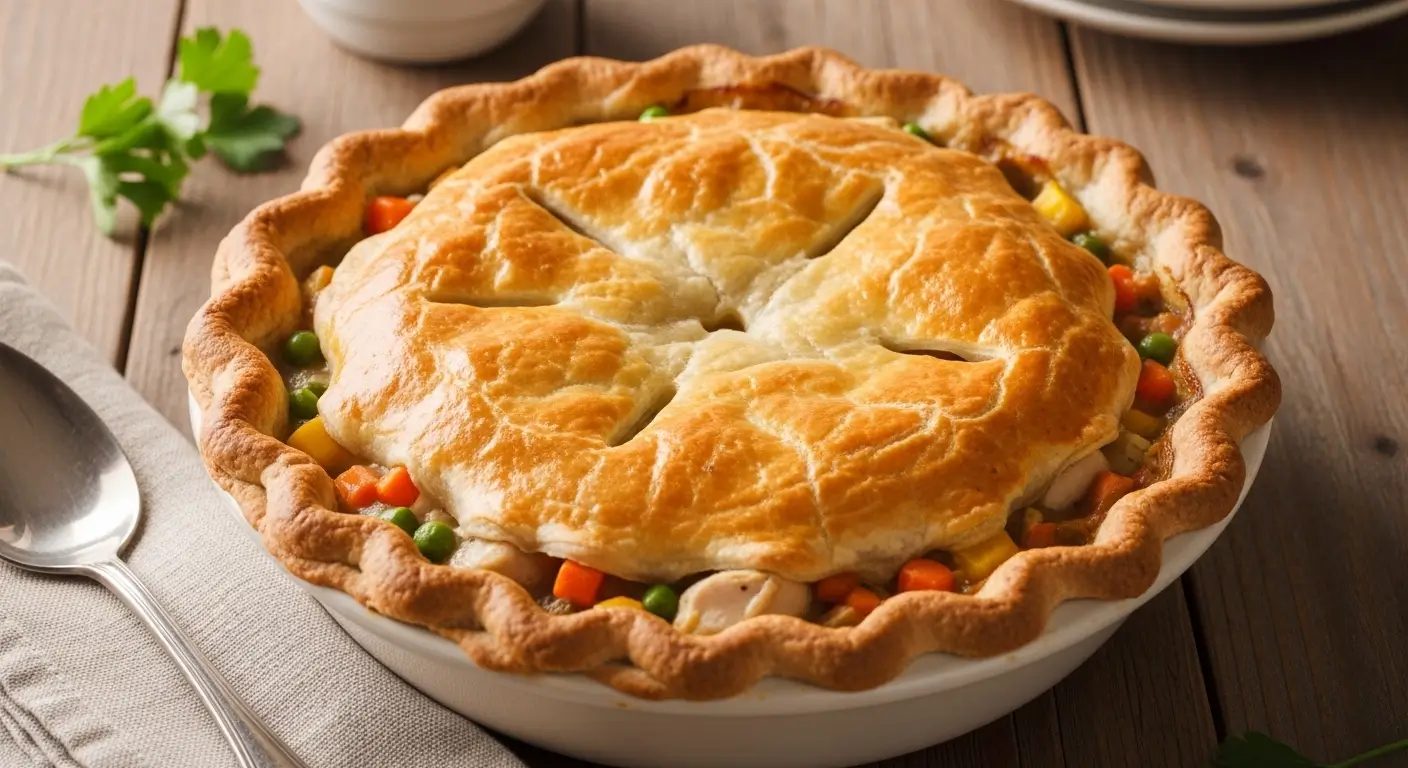
Chicken pot pie is a savory pie (or casserole-style pie) filled with chicken, vegetables, and a creamy sauce. Condensed cream of chicken soup works as the shortcut base because it already contains:
- concentrated chicken flavor
- fat for richness
- starch for thickening
So you skip the roux and still get a thickened filling that sets after baking.
Who this recipe is for (and when it fits)
This method is perfect if you’re:
- a beginner cook who wants a “can’t-fail” creamy filling
- feeding a family and need dinner tonight speed
- meal-prepping freezer meals
- using leftover roast chicken or rotisserie chicken
- cooking in a region where puff pastry is common and pie crust is harder to find
Best moments to make it:
- weeknights
- cold weather dinners
- using leftover chicken from holidays
- budget-friendly pantry-staple cooking (no exact price claims—just fewer specialty ingredients)
Also Read: Gluten Free Naan Recipe: Soft, Chewy, Easy 2026
Ingredients (simple base + smart swaps)
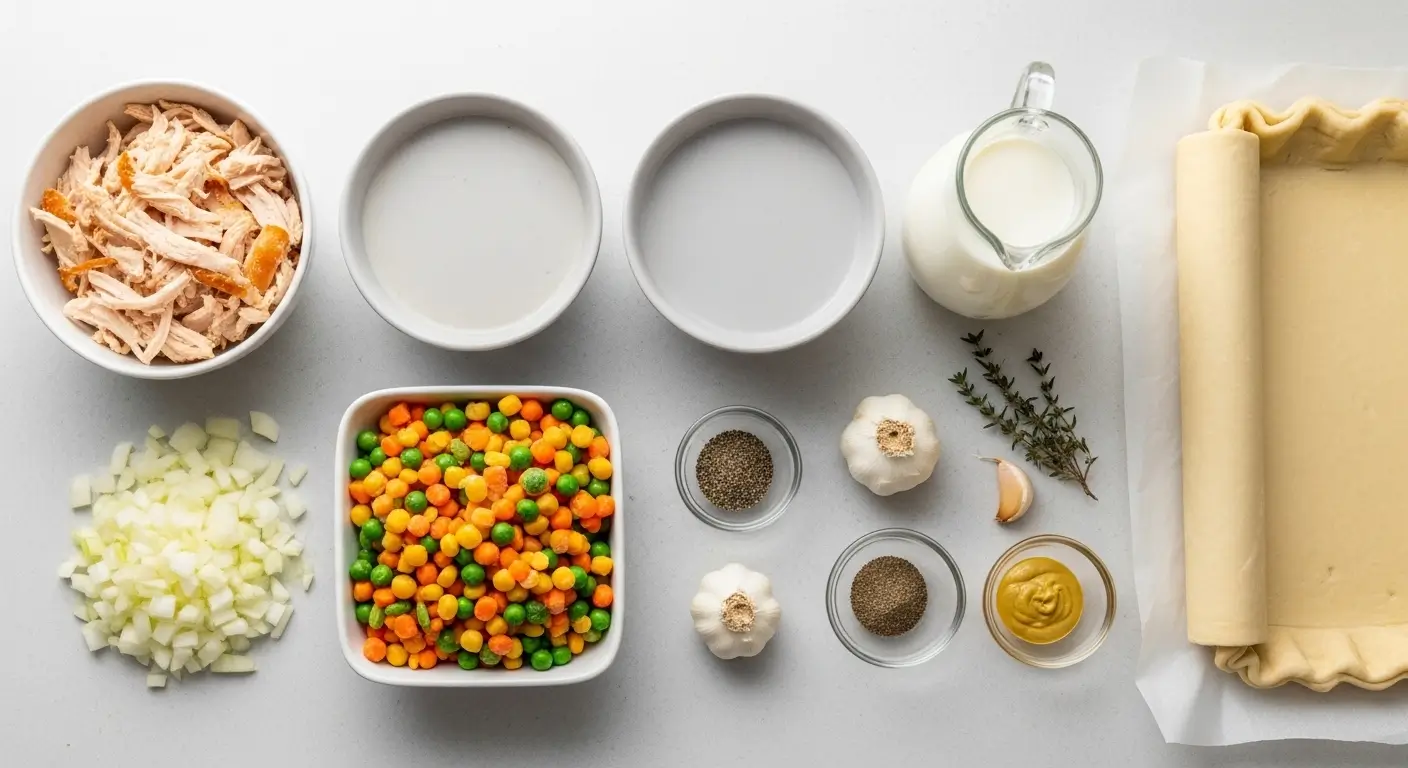
This recipe is written for top crust only (the easiest, least soggy option). After the main method, you’ll see options for puff pastry, biscuits/Bisquick, and double crust.
Filling
- Cooked chicken: 2½ to 3 cups (about 350–425 g), shredded or diced
Rotisserie chicken is ideal; thighs stay extra juicy. - Condensed cream of chicken soup: 2 cans (10.5 oz each / about 300 g each)
If available, low-sodium versions help you control salt. - Frozen mixed vegetables: 2 cups (about 300–320 g)
Or use peas + carrots; corn + green beans; or your favorite mix.
Aromatics (recommended)
- Onion: 1 small, diced
- Celery: 1–2 ribs, diced
- Garlic: 1–2 cloves, minced (optional)
Liquid (as needed)
- ½ to 1 cup (120–240 ml) milk or chicken broth/stock
Add gradually to hit the right thickness.
Seasoning
- Black pepper (start with ½ tsp)
- Dried thyme or poultry seasoning (½–1 tsp)
- Optional: ½ tsp Dijon mustard for brightness
Crust (top only)
- Refrigerated pie crust: 1 round (9-inch / 23 cm)
OR puff pastry sheet
OR biscuit topping (see variations)
Optional finishing
- Egg wash: 1 egg + 1 tbsp (15 ml) water (for golden shine)
“Near me” ingredient note (global)
If condensed soup or pie crust isn’t common where you live, search:
- “cream of chicken soup near me”
- “puff pastry near me”
- “rotisserie chicken near me”
- “frozen mixed vegetables near me”
And if you still can’t find condensed soup, use the homemade substitute later in this guide.
Tools you’ll need
- 9-inch (23 cm) pie dish or 8×8-inch (20 cm) baking dish
- Skillet or saucepan
- Spoon/spatula
- Knife + cutting board
- Foil (to protect edges)
- Food thermometer (recommended for poultry safety)
Also Read: Sourdough Bread Machine Recipe: Easy Loaf with Starter 2026
The easy method: step-by-step (top crust, no bottom crust)
SGE-ready bake time answer (≤45 words)
Bake chicken pot pie at 200°C/400°F until the crust is deep golden and the filling bubbles at the edges, usually 25–35 minutes. Let it rest 10–15 minutes before serving so the filling thickens and slices cleanly.
Step 1: Preheat and prep
Heat oven to 200°C / 400°F.
If using refrigerated crust, let it sit out 10–15 minutes so it won’t crack.
Step 2: Build flavor fast (optional but makes it taste homemade)
In a skillet over medium heat:
- Sauté onion and celery in a little butter or oil for 4–5 minutes until soft.
- Add garlic for 30 seconds if using.
This quick mirepoix step (onion/celery/carrot family) boosts aroma and depth without slowing you down.
Step 3: Make the creamy filling (the “don’t go runny” point)
Add to the skillet:
- Frozen mixed vegetables (let them warm through)
- Cooked chicken
- Condensed cream of chicken soup (both cans)
- Start with ½ cup (120 ml) milk or broth
Stir until hot and cohesive.
Target thickness: thick like a hearty stew, not like a thin soup.
If it looks too thick to spread easily, add liquid 2 tablespoons at a time.
Season with black pepper and thyme/poultry seasoning. Taste carefully before adding salt—condensed soup can already be salty.
Step 4: Assemble
Spoon filling into your pie dish or baking dish.
Lay the crust on top. Tuck edges slightly inside the dish or crimp at the rim.
Cut 4–6 vents/slits for steam.
Optional: brush with egg wash for a glossy, golden brown finish.
Step 5: Bake
Bake 25–35 minutes until:
- crust is deep golden
- filling is bubbling at the edges (this matters more than time)
If the top browns too fast, tent loosely with foil.
Step 6: Rest for the perfect set
Rest 10–15 minutes before cutting. This is the secret to a thickened filling that holds together instead of spilling out.
Also Read: Cherries in the Snow Recipe: Easy No-Bake Dessert 2026
Decision framework: choose your topping (and when each wins)
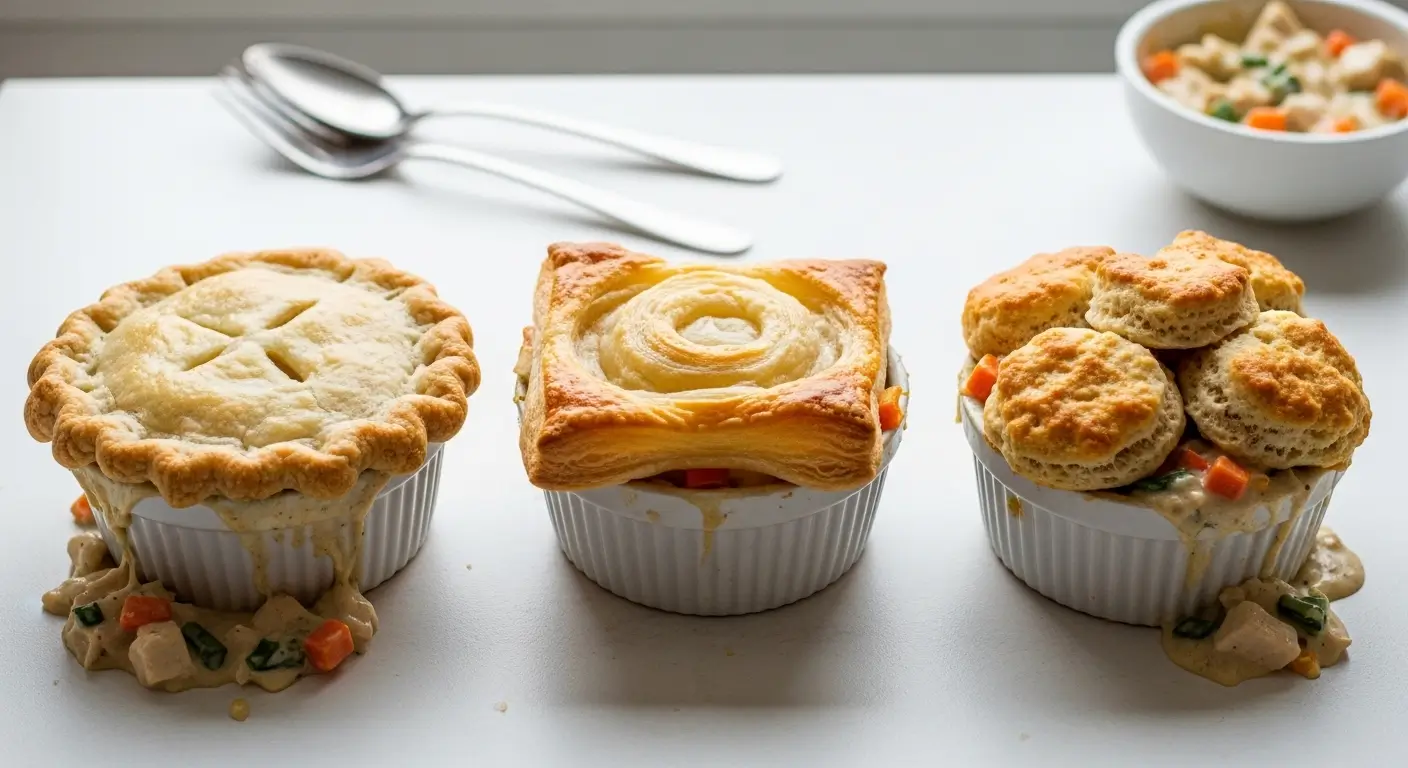
If you want one pot pie recipe that fits every pantry, the topping choice is the key decision. Use this quick matrix.
| Topping | Best for | Main risk | Pro tip |
|---|---|---|---|
| Top pie crust | Fast + classic | Pale top if underbaked | Bake until bubbling; egg wash helps |
| Puff pastry | Ultra flaky + dramatic | Underbaked middle | Keep pastry cold; bake hot |
| Biscuit topping | Cozy, “chicken and biscuits” vibe | Doughy centers | Space biscuits; bake fully |
| Double crust | Traditional slices | Soggy bottom | Blind-bake bottom 8–10 min |
Pros/cons (transactional-style quick scan)
Top crust only
Pros: easiest, least soggy, fastest
Cons: not the “full pie” look
Puff pastry
Pros: flakiest, crisp layers, great for casseroles
Cons: needs full bake-through; can look done before it is
Biscuits/Bisquick
Pros: quick pantry-friendly, kid-friendly texture
Cons: must bake until centers are cooked
Double crust
Pros: classic pie slice feel
Cons: extra steps to avoid soggy bottom
Also Read: Sausage Potato Leek Dijon Mustard Hash Recipe 2026
Thickness control: how to prevent runny filling (and fix it fast)
SGE-ready “why runny” answer (≤45 words)
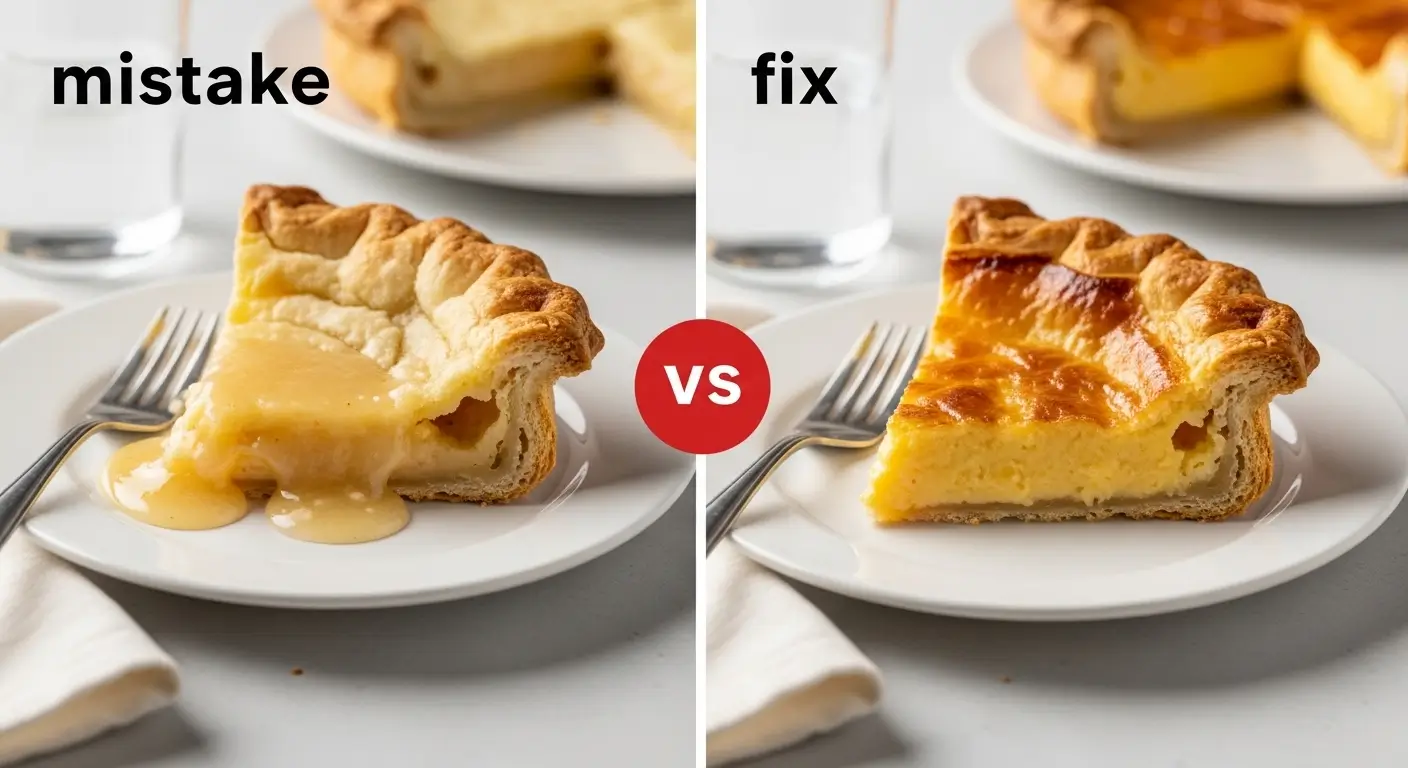
Pot pie filling turns runny when too much liquid is added, frozen vegetables release water, the pie is underbaked (not bubbling), or it’s cut too soon. Keep the filling thick before baking, bake until bubbling, and rest 10–15 minutes.
The “too thin / too thick” table
| Problem | Why it happens | Fix (fastest) |
|---|---|---|
| Too thin before baking | Too much milk/broth, watery veg | Simmer 2–3 min; add slurry |
| Too thin after baking | Underbaked or cut too soon | Bake until bubbling; rest longer |
| Too thick | Not enough liquid | Add 2 tbsp liquid at a time |
| Too salty | Soup + salted broth | Use unsalted broth next time; add more veg/chicken |
Thickening options (choose one)
- Cornstarch slurry: 1 tbsp cornstarch + 1 tbsp cold water. Stir in; simmer 1–2 minutes.
- Flour: 1–2 tbsp flour. Simmer a few minutes to remove raw taste.
- Instant mashed potatoes: 1–2 tbsp to add body without extra cooking.
Preventing soggy crust (especially bottom crust)
Top crust only avoids most sogginess. If you want double crust, do this:
- blind-bake bottom crust 8–10 minutes
- keep filling thick (less free liquid)
- avoid overfilling
- bake until filling bubbles
Also: a glass pie plate helps you see browning, but metal can brown faster. Either works—just prioritize “bubbling” as your doneness signal.
Also Read: Amish Apple Cake Recipe: Easy Apple Cake Dessert 2026
Make-ahead, freezing, and reheating (without ruining texture)
Best make-ahead method (crispest crust)
Cook filling and cool completely.
Refrigerate filling up to 1–2 days.
Add crust right before baking.
Freezing: two options
Option A (best results): freeze filling only
- Cool filling completely.
- Freeze in airtight containers.
- Thaw overnight in the fridge, top with fresh crust, bake.
Option B: freeze assembled, unbaked
- Assemble in a freezer-safe dish.
- Wrap airtight (plastic + foil).
- Bake from frozen: expect longer bake time and tent with foil if the top browns early.
Reheating leftovers (keep crust crisp)
Oven reheat is best: moderate heat until hot through.
Microwave works but softens crust; re-crisp in oven or air fryer afterward if you care about crunch.
Global substitutions (when condensed soup isn’t available)
In some places, condensed cream soups are expensive or hard to find. Here’s a quick substitute that still delivers a creamy sauce.
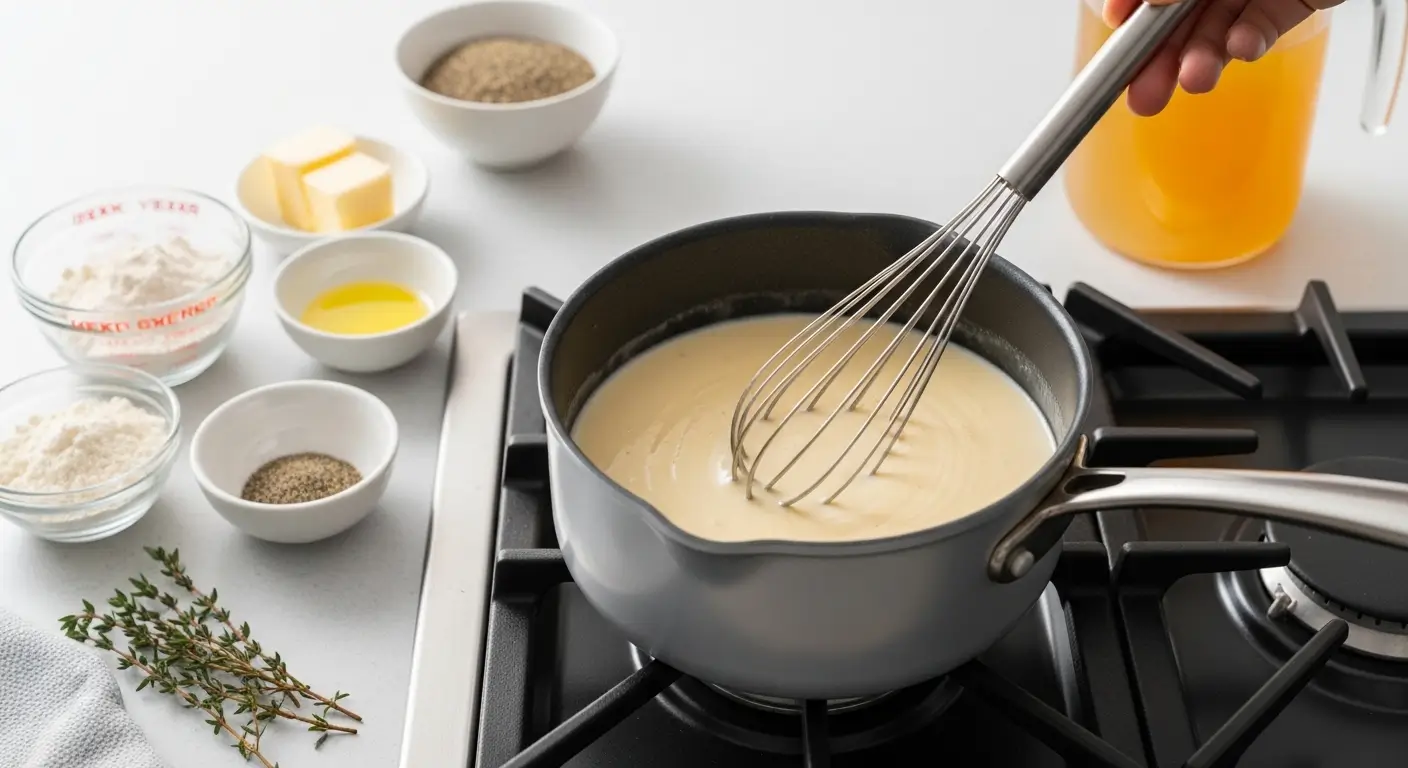
Fast homemade “cream soup” substitute (no canned soup)
In a saucepan, whisk and heat:
- 2 cups (480 ml) chicken broth
- 1 cup (240 ml) milk (or unsweetened dairy alternative)
- 3 tbsp flour (or 2 tbsp cornstarch slurry added later)
- 2 tbsp butter or oil
- thyme + pepper
Simmer until thick like gravy, then mix with chicken and vegetables. It’s not identical, but it hits the same comfort-food cream sauce function.
Also Read: 2 Banana Muffin Recipe: Small Batch Banana Muffins
Regional practicality:
- In London and Sydney, puff pastry is often easier to source than pie dough—use it.
- In Karachi, condensed soups may be limited to larger supermarkets; the homemade substitute is usually the simplest path.
- In Toronto and New York City, low-sodium condensed soup options are more common—great for salt control.
Cost drivers (pricing trigger without fake numbers)
This dish is generally budget-friendly, but cost varies by what you buy.
| Cost driver | Usually raises cost | Usually lowers cost |
|---|---|---|
| Chicken | Rotisserie, breast-only | Leftover roast chicken, thighs |
| Vegetables | Fresh pre-cut mixes | Frozen mixed vegetables |
| Crust | Puff pastry, specialty dough | Store-brand pie crust |
| Soup | Name-brand, low-sodium specialty | Store brand condensed soup |
Brand familiarity note: Many readers recognize recipe formats inspired by Pillsbury, Betty Crocker, and Allrecipes, but this version is designed to be more globally flexible and troubleshooting-proof.
Common mistakes (and quick fixes)
- Mistake: “Looks done” but filling is thin → Fix: bake until bubbling at the edges, not just golden on top.
- Mistake: bland filling → Fix: sauté onion/celery, add thyme/poultry seasoning, pepper, and a tiny spoon of mustard.
- Mistake: too salty → Fix: use low-sodium soup, avoid salted broth, season at the end, add extra vegetables.
- Mistake: pastry cracks → Fix: let refrigerated dough warm slightly; don’t stretch it tight.
- Mistake: undercooked puff pastry → Fix: bake hot and long enough; if top browns early, tent with foil and keep baking.
Food safety (simple, essential)
For poultry dishes, the safest finish is 165°F / 74°C in the center of the filling. A thermometer makes this easy.
Also follow the “two-hour rule” for leftovers: refrigerate promptly after serving.
Food safety references commonly align with USDA FSIS and FoodSafety.gov guidance.
Variations (same base, different outcomes)
- Puff pastry chicken pot pie
Use puff pastry sheet on top. Keep pastry cold until baking. Bake at 200°C / 400°F until deeply golden and crisp. - Biscuit/Bisquick-style pot pie
Use biscuit dough on top (drop biscuits or Bisquick-style mix). Bake slightly lower if biscuits brown too fast: 190°C / 375°F. Ensure biscuit centers are cooked. - No peas / veggie swaps
No peas: use carrots + corn + green beans. Add mushrooms for savory depth. Add diced potatoes only if par-cooked (otherwise they can stay firm). - Lighter approach (without losing comfort)
Use low-sodium soup · Add more vegetables · Use chicken breast if preferred · Use top crust only (less pastry)
7+ FAQs (human readable)
Can I use rotisserie chicken for chicken pot pie?
Yes. Rotisserie chicken is one of the easiest options. Remove skin, shred the meat, and stir it in once the sauce is hot so it stays tender.
How long do you bake chicken pot pie with cream of chicken soup?
Typically 25–35 minutes at 200°C/400°F, but the real doneness signal is a deep golden crust and filling that’s bubbling at the edges.
How do I thicken chicken pot pie filling if it’s too runny?
Simmer the filling a few minutes before baking, use less added liquid, and if needed add a cornstarch slurry (1 tbsp cornstarch + 1 tbsp water) and simmer until glossy.
Why is my pot pie watery after baking?
Common causes are too much milk/broth, frozen vegetables releasing moisture, underbaking (not bubbling), or slicing too soon. Bake until bubbling and rest 10–15 minutes.
How do I prevent a soggy bottom crust?
The easiest solution is top crust only. If using double crust, blind-bake the bottom 8–10 minutes and keep the filling thick before baking.
Can I freeze chicken pot pie before baking?
Yes. For best texture, freeze the cooled filling separately and add fresh crust when baking. You can freeze assembled unbaked pies too—just plan for a longer bake.
What size dish should I use?
A 9-inch (23 cm) pie dish is classic, but an 8×8-inch (20 cm) baking dish works great and is easy to portion. Deeper dishes may need a few extra minutes.
Do I need egg wash and vents?
Vents are strongly recommended so steam can escape and the crust stays crisp. Egg wash is optional but helps the crust turn glossy and golden brown.
What’s the difference between chicken pie and chicken pot pie?
They’re very similar. “Pot pie” usually implies a creamy, gravy-like filling with vegetables, while “chicken pie” can be simpler or less saucy depending on region.
Conclusion
This easy chicken pot pie recipe with cream of chicken soup is built to be repeatable: thick filling, golden crust, and flexible ingredients no matter what your local store carries. Keep the filling thick before baking, bake until bubbling, rest before cutting, and choose the topping that fits your time—pie crust, puff pastry, or biscuits. Once you’ve made it once, it becomes a reliable “dinner tonight” comfort meal you can also freeze for later.
Leave a Reply